Tips for Avoiding Sound Overlap at Multi-Speaker Events
When you’re hosting an event with several speakers, keeping the sound clear and well-timed can be tricky. Sounds from one area can start spilling into another, and when that happens, your audience might get confused, distracted, or just plain frustrated. That’s why planning for sound overlap needs to happen early, especially when setting up your stage and audio layout.
Even the best content can lose impact if people have trouble hearing it. That’s where professional audio rentals come in. Getting the right gear (and knowing how to use it) makes a world of difference in controlling sound and keeping each voice distinct. Taking time to plan can help make sure every speaker gets a moment to be heard, loud and clear. Our audio rental inventory includes professional audio consoles, wireless microphones, processing and amplification, monitor systems, and concert-quality sound systems that are built to keep speech clear, even in complex event environments.
Know Your Event Space
Every venue carries its own sound quirks. In places like Carrollton, Texas, you might be dealing with wide open halls, high ceilings, or outdoor pavilions that bounce sound more than expected. Hard walls and metal roofing can create echoes you weren’t counting on. Wind and shifting winter temperatures in February can also change how sound carries across a space if you’re outdoors.
It helps to walk the space in advance. Pay attention to corners where voices might bounce, or long hallways that could carry sound directly to areas where it doesn’t belong. Watch for spots under overhangs or near windows where audio might get lost or muffled. Walk through the space as if you were an attendee and picture where someone might have trouble hearing or where sounds may mix together in confusing ways. These advance checks may also reveal potential obstacles for setting up speakers, cables, or microphones.
Even open-air setups need just as much attention. Think about wind patterns, background noise, or nearby roads that could mix with the voices on your microphone. During winter in Texas, cooler weather or sudden gusts can carry sound much farther or, at times, eat it up so that voices don’t carry as expected. These details don’t take long to check, but they do affect how sound travels during the event.
Plan the Sound Zones
One of the best ways to stop sound from overlapping is to divide your space into sound zones. Each zone can be given its own speaker or small group of speakers, so sound stays where it’s needed instead of flooding into every corner.
When possible, each person speaking should stay within a specific zone. This keeps their sound focused and gives the audience a cleaner experience. If two or more people are speaking at once from different areas (which happens often during large events), this zoning helps prevent voices from layering on top of each other. It also helps minimize distractions and keeps conversations from overlapping.
Here’s what helps the most when planning zones:
Keep speakers aimed in specific directions, not just pointed broadly
Make sure lighting and seating fit the direction of the audio to guide attention
Place barriers or quiet zones between overlapping audio paths when needed
When you apply zoning, it allows each area of your event to have its own sound focus. Groups listening in one part of the room won’t hear echoing voices from another location, so no one needs to compete to be heard. This is especially important in larger halls or rooms that have different panels or breakout sessions running at the same time. Zoning also helps reduce sound feedback and keeps levels more pleasant for everyone.
Use the Right Gear for the Job
Not every piece of audio equipment will work for every room. That’s why using the right gear matters just as much as where you put it. Microphones vary, some are better for up-close speaking, others work across wider spaces. And speakers come in all strengths and styles too, depending on whether you’re indoors, outdoors, or in a space with a lot of echo.
Professional audio rentals help you match your space to the right tools. At AMS Events, we support corporate events, conventions, and trade shows with audio packages matched to each venue so coverage and clarity stay consistent from the front row to the back. If you’re in a wide-open civic center or a chilly outdoor venue in February, you’ll want gear that can handle both the size and the weather. In-Carrollton setups especially benefit from wireless mics and compact line array speakers that can be adjusted on the fly without interrupting the flow of things.
Mixing boards and sound control systems allow behind-the-scenes techs to adjust things as the event moves along. That way, voice levels stay clear and no one ends up drowned out or too loud. Getting the setup right before guests arrive is important, but it’s just as key to adjust things live as needed. Good setup also means using the right cables and stands to avoid tripping hazards, so all equipment is tidy and safe. If something shifts during the event or if an unexpected noise arises, it’s easy for your crew to recalibrate with the right technology.
Coordinate Timing and Transitions
Sometimes, the problem isn’t where the sound is coming from, it’s when. If two speakers start talking at the same time from different sides of the room, their words can blend together or interrupt each other, especially if the sound systems overlap. Getting the timing right matters just as much as mic placement.
We always recommend creating a plan for shifts between speakers. This could mean muting certain mics during introductions, using stage lighting to mark transitions, or building small pauses into the program. These little breaks help the audience reset and know where to place their attention.
Rehearsals are a big help here. Doing a walkthrough lets everyone hear how their voice travels and how long it takes for their mic to fully switch off. It’s about shaping the flow so every speaker has a clear lane. When things stay smooth, no one has to guess who’s supposed to be talking. This extra rehearsal step often uncovers small technical needs that can be corrected quickly, such as changing a microphone battery, fine-tuning speaker position, or checking levels at different positions in the room.
Planning ahead for transitions between sessions or topics can also help keep everything running smoothly. Encourage speakers to keep an eye on the crew for a wave or light signal when it’s time to step up to the microphone or move offstage.
Let the Crew Handle the Fine-Tuning
Even with a solid plan, live events rarely go exactly how you expect. Crowds move, mics shift, someone talks louder than planned. That’s why having an experienced crew calling the shots behind the soundboard can make such a difference.
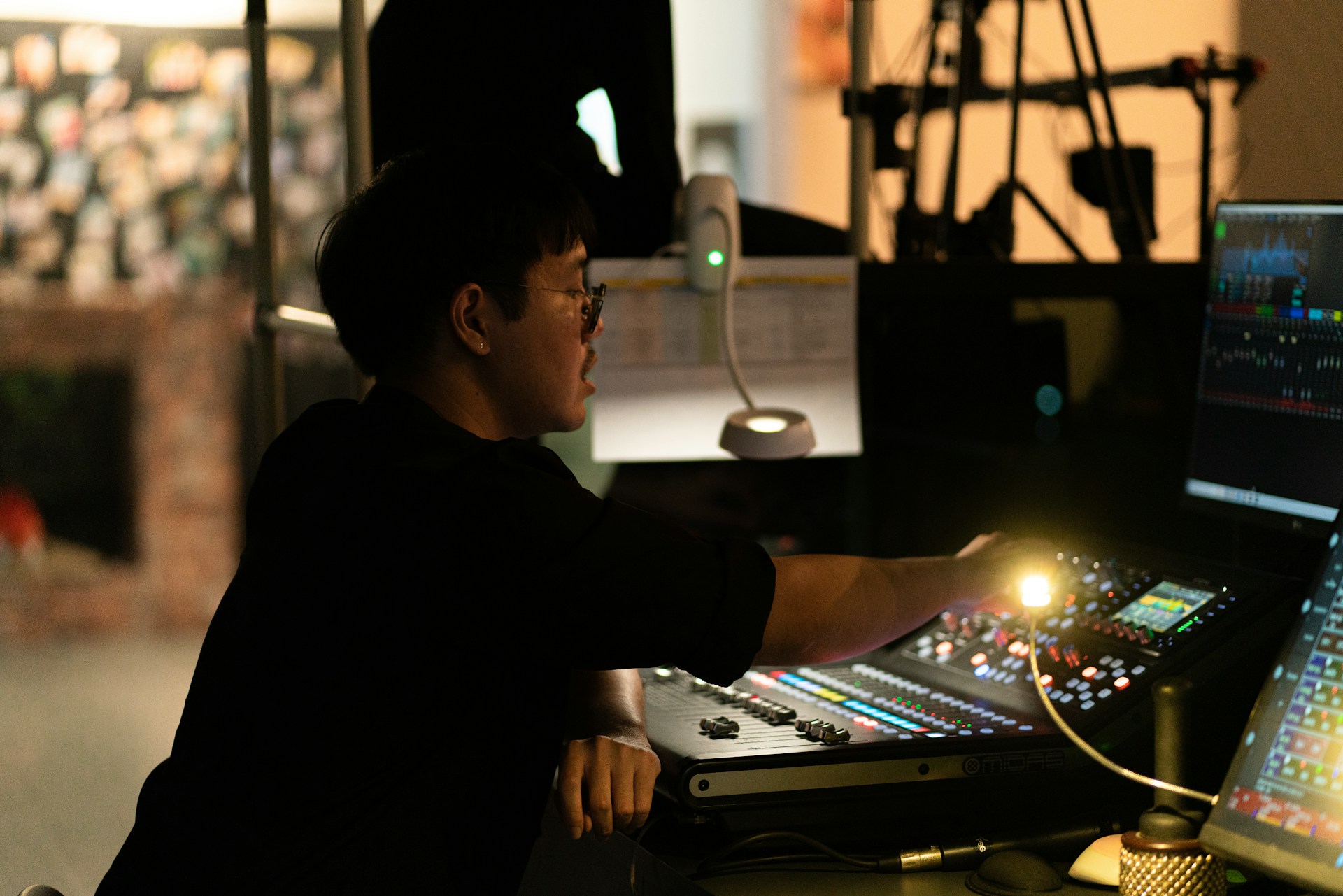
Audio techs don’t just hit play. They monitor throughout the event, noticing when one mic picks up too much or when a speaker’s voice is lost under applause. Their job is to quickly adjust sound levels, make small shifts to avoid feedback, and keep every speaker sounding their best. Our technicians can assist from the initial equipment selection and setup through on-site troubleshooting, staying with your event so adjustments happen quickly when something changes.
In February, local weather can bring another layer of surprise. Winter wind or sudden cold snaps in Carrollton can change how far your audio travels across an outdoor space. Sound that felt smooth during the daytime walkthrough might feel thinner when night falls. A trained crew reads those changes and tweaks the system as needed on the spot. With professionals watching the controls, last-minute technical issues can be handled quietly before they become a distraction, so speakers and your audience can focus on the message and not on a sudden change in volume or quality.
Sound That Keeps the Audience Tuned In
When everything’s working together, space, timing, gear, and transitions, your sound just works. Speakers feel confident, nobody talks over anyone, and listeners stay tuned in without needing to strain to hear.
Planning this kind of setup takes time, but the payoff is worth it. Cleaner audio removes confusion, gives everyone a fair moment in the spotlight, and helps the whole day feel smoother. When people can hear clearly, they stay more engaged, more focused, and more comfortable through each speaker change and topic shift. It’s the kind of detail they may not notice right away, but it shapes the experience from start to finish.
No matter how complex your venue or program may be, we’re here to help you get the audio just right. From zoning and timing to gear that handles Carrollton weather, we know how to keep things running smooth and sounding clear. Our experience with setup and live adjustments gives every speaker a strong platform and every guest a better experience. If you’re planning an event and need support with professional audio rentals, contact AMS Events today.
